26 Sep 2026
Weather's Hidden Influence on Professional Football Wagering Statistics and Bookmaker Adjustments
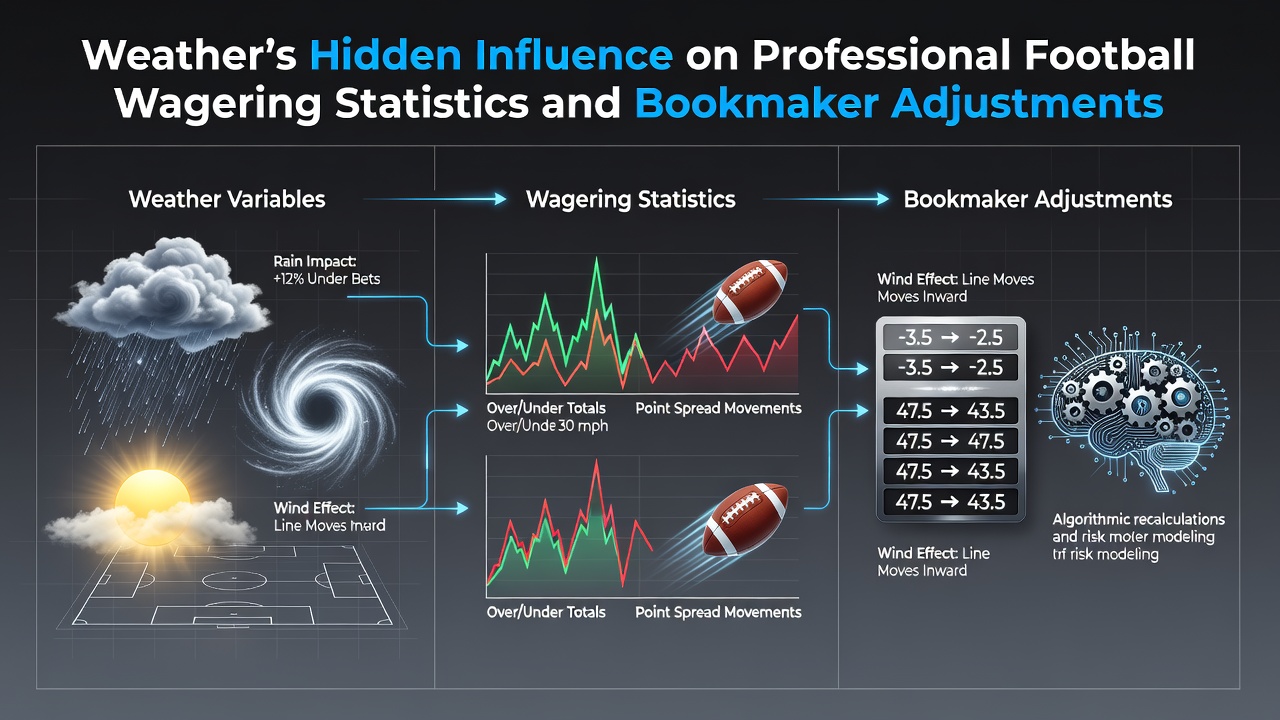
Weather patterns exert measurable effects on professional football outcomes, and those effects show up clearly in wagering statistics tracked across multiple seasons. Data from the National Weather Service indicates that precipitation and wind speeds above 15 miles per hour correlate with reduced passing yardage and lower total points scored in outdoor stadiums. Researchers at several universities have compiled game logs that demonstrate how these conditions shift both player performance metrics and the totals lines set by sportsbooks.
Statistical Patterns in Game Data
Passing attempts decline when sustained winds exceed certain thresholds because quarterbacks adjust their mechanics and coaches call fewer deep routes. One study covering a decade of regular season games found that games played in temperatures below 35 degrees Fahrenheit produced an average drop of 18 rushing yards per team compared with games above 50 degrees. Field goal success rates also fall when crosswinds reach 20 miles per hour or higher, and those changes appear in official box scores rather than in anecdotal reports.
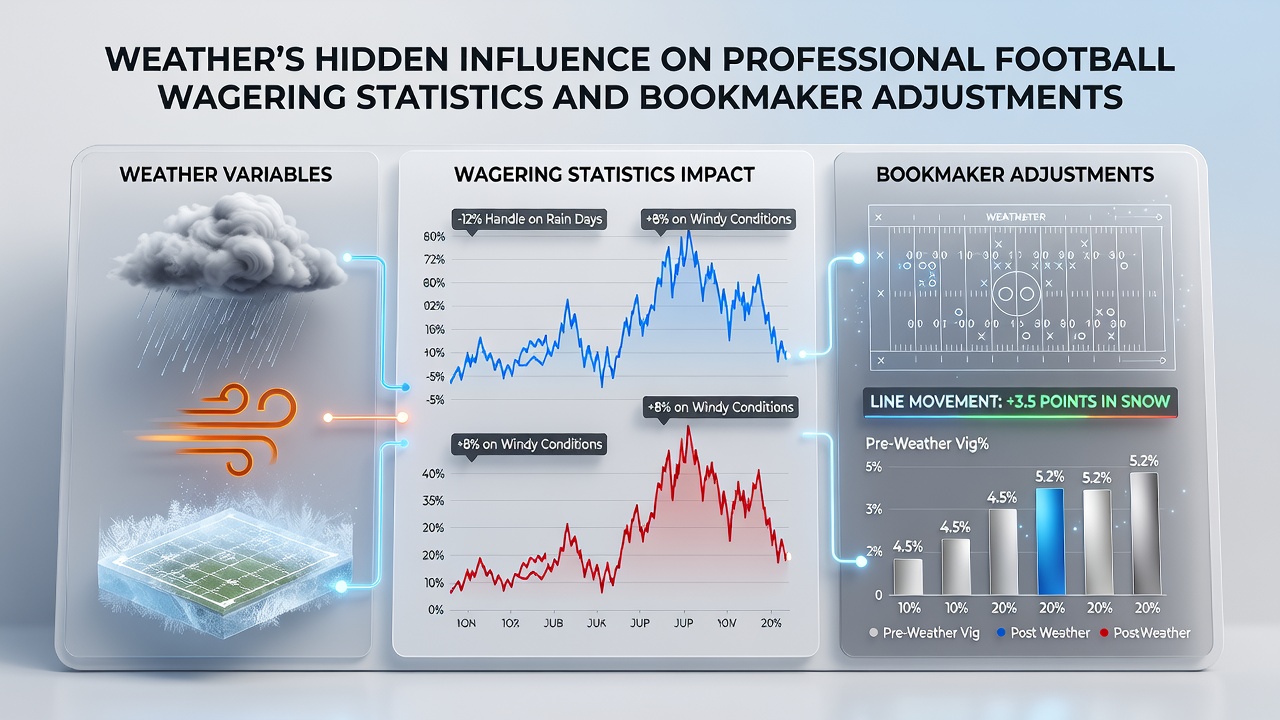
Bookmakers monitor forecast models issued by government agencies and adjust totals lines accordingly. When early-week projections call for heavy rain, the over/under number often moves down by two to four points within 48 hours. Sharp bettors who track line movement data have documented these shifts in public databases maintained by sports analytics firms, and the adjustments occur consistently across multiple sportsbooks operating in regulated markets.
Bookmaker Response Mechanisms
Oddsmakers incorporate weather variables into their proprietary models alongside injury reports and travel schedules. They receive updated National Weather Service forecasts several times daily during the week leading up to Sunday games, and they recalibrate totals and side lines when precipitation probability rises above 60 percent. In September 2026, early season games in northern markets saw rapid line movement after meteorologists upgraded rain chances for multiple outdoor venues, and those revisions aligned with observed reductions in scoring during the actual contests.
Live betting markets react even faster once games begin under changing conditions. When unexpected wind gusts develop during the second quarter, in-game totals lines can drop within minutes as automated systems and human traders respond to real-time weather feeds. Observers note that these adjustments prevent large imbalances in liability for the sportsbooks while still offering bettors updated prices that reflect current conditions.
Regional Variations and Data Sources
Stadiums with open ends or minimal wind protection show stronger correlations between weather and statistical outcomes than domed venues. Games in coastal markets experience more frequent wind-related adjustments, whereas games in covered stadiums remain largely unaffected by surface conditions. Environment and Climate Change Canada has published comparative analyses of cross-border stadium data that highlight similar patterns in Canadian Football League contests played outdoors, providing additional context for analysts who study North American professional football as a whole.
Academic papers from institutions in the United States and Australia have examined how temperature extremes influence injury rates and substitution patterns, which in turn affect game scripts and final scores. These studies rely on public play-by-play data and official weather observations rather than proprietary betting records, yet the findings help explain why totals lines move in predictable directions when forecasts change.
Practical Implications for Line Movement
Sharp bettors who monitor weather updates alongside line movement sometimes identify discrepancies before the market fully incorporates new forecast information. When a late-afternoon thunderstorm warning is issued for a stadium that rarely sees severe weather, the totals line may lag for several hours before sportsbooks revise the number downward. Historical records show that such delays occur most often during early September games when weather models carry higher uncertainty.
Regulated operators in multiple jurisdictions maintain internal thresholds for weather-related line adjustments, and they document those changes in compliance reports submitted to state gaming control boards. The resulting dataset allows analysts to quantify how frequently weather alone drives movement independent of other factors such as injuries or public betting trends.
Conclusion
Weather influences professional football statistics in measurable ways that sportsbooks translate into adjusted wagering lines. Government forecast data, academic research, and historical game logs all confirm consistent relationships between atmospheric conditions and scoring outcomes. Bookmakers respond by revising totals and side lines as new information arrives, and those revisions appear in both pregame and live markets. Observers tracking these patterns across multiple seasons continue to see the same directional effects repeated in outdoor venues throughout North America.